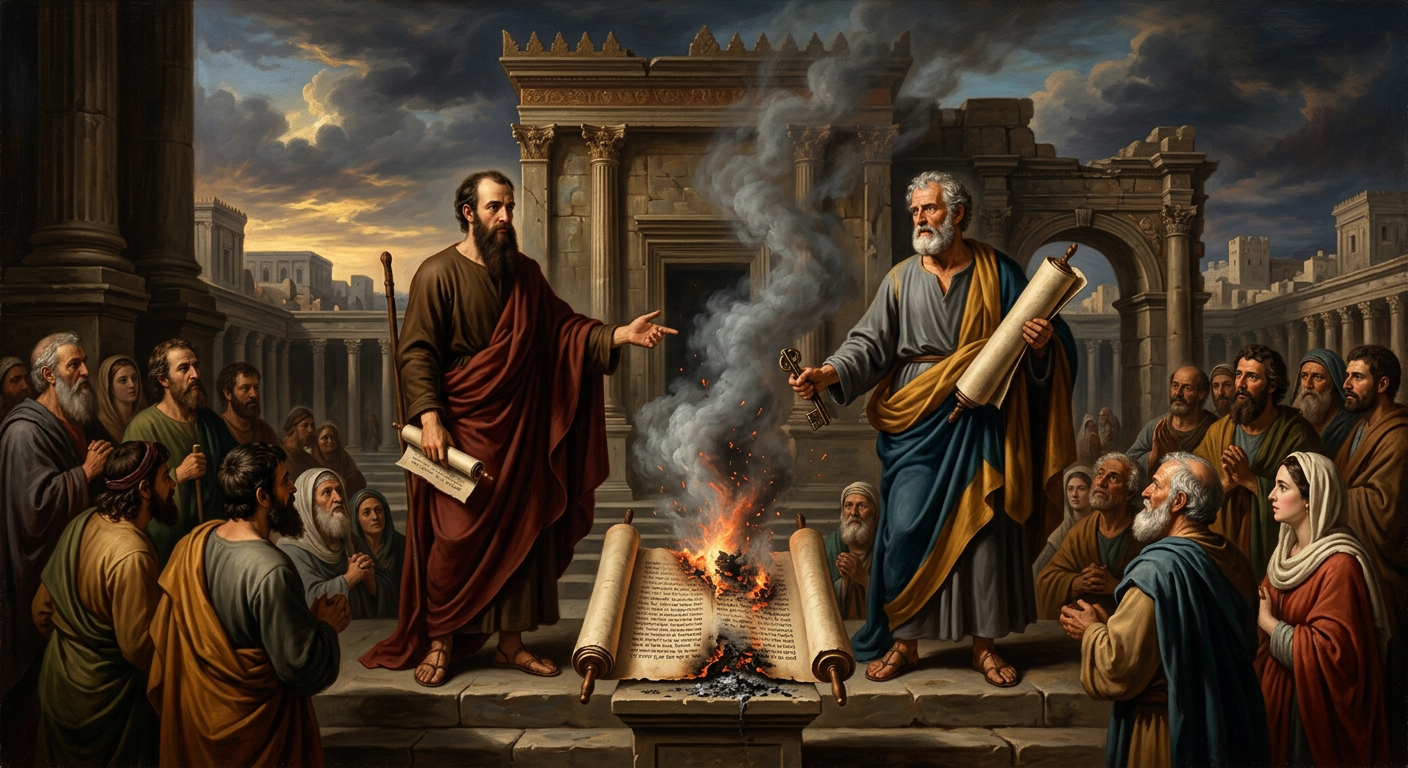
Peter says Paul taught about the same general subject (2 Peter 3:15-16). Peter describes a coming “day of the Lord” involving fire, judgment, and the passing of “heavens and earth.” Many Christians read this as the literal destruction of the physical universe.
However, fire was a major feature of the old covenant. Sinai burned with fire, sacrifices were consumed by fire, and covenant violations were judged by fire—yet the earth itself was never destroyed. Prophets often used cosmic and fiery language to describe covenantal upheaval, not planetary annihilation. Deuteronomy 32, Isaiah 24, and Isaiah 65 all use “heaven and earth” symbolically for Israel's covenant order.
Paul emphasizes this covenant transition. In 2 Corinthians 3:11 the old covenant was fading; Hebrews 8:13 says it was ready to vanish; Hebrews 12:26-28 describes God shaking heaven and earth so the shakable order is removed and an unshakable kingdom remains.
Paul does mention creation in Romans 8:19-23, but he speaks of liberation and renewal, not the burning of the planet. This makes the preterist reading of 2 Peter 3 plausible and the more likely correct interpretation of Peter's fiery imagery being in alignment with covenantal judgment language rather than the literal destruction of Earth.